

Modern ai workflow automation tools for small business eliminate repetitive tasks by connecting software platforms, extracting unorganized data, and executing daily routines. Instead of paying staff to copy records across spreadsheets, these software platforms automatically route incoming leads, answer customer questions, and update core operational databases in real time.
Top AI Workflow Automation Tools for Small Business Teams
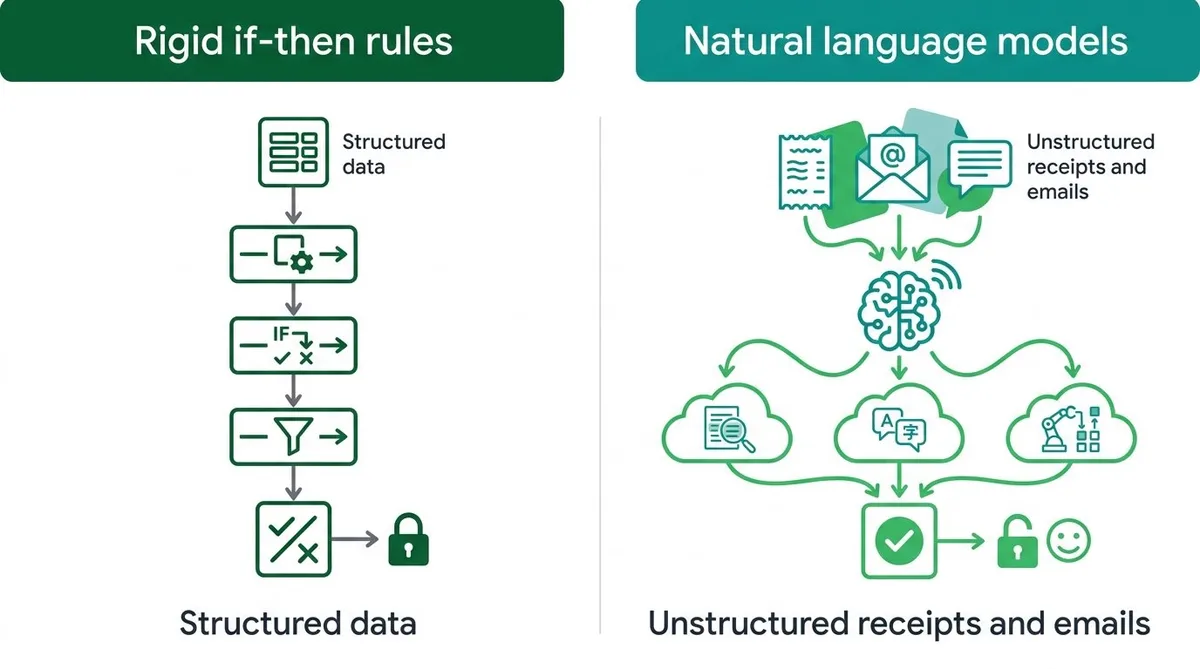
Traditional platform triggers depend on rigid rules, meaning a broken field format stops the entire process. Modern software platforms now feature AI Automation agents that read unorganized text from emails, receipts, and client forms. Therefore, learning how to integrate ai into existing business workflows requires choosing between rigid triggers and flexible AI agents.
Understanding the true cost of ai automation for small business requires reviewing task-run pricing structures. Most platforms provide limited free monthly steps, but multi-step workflows burn through allocations quickly. As a result, sudden operational spikes can trigger expensive enterprise tier upgrades.
Non-technical teams use low-code builders to route inbound leads and triage customer emails without hiring software developers. For example, the Main Street AI Monitor reports half of small business employees use artificial intelligence for daily productivity. Building automated Workflow Automation pipelines or Internal Business Tools lets staff triage customer tickets without manual typing.
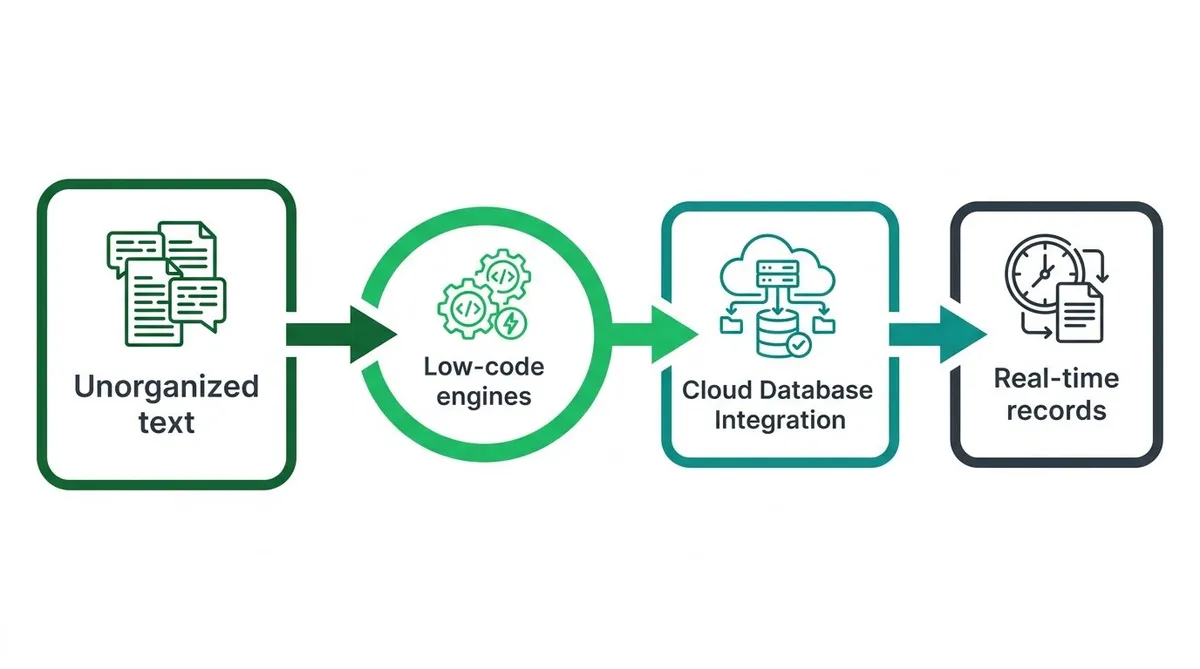
To learn how to implement ai in a small business, map your most tedious daily operational bottlenecks first. Linking low-code engines with Cloud Database Integration replaces messy spreadsheets with structured, real-time records. Consequently, your team spends less time fixing manual typing mistakes and more time serving active clients.
What is the difference between traditional rule-based automation and AI workflow automation?
The difference between traditional rule-based automation and AI workflow automation lies in how data is processed. Traditional systems rely strictly on rigid if-then rules for structured data. In contrast, ai workflow automation tools for small business use natural language models to parse unstructured receipts and emails.
Research from the Main Street AI Monitor shows small business staff use AI primarily to boost daily output rather than eliminate staff. Instead of replacing workers, modern systems handle tedious chores so your team focuses on client service. As a result, your team spends less time copying records between systems.
When learning how to integrate ai into existing business workflows, system structure matters. For example, connecting legacy databases to visual builders using Cloud Database Integration requires 15 to 30 hours of setup time. However, this technical effort pays off because internal business tools can then process invoices and support requests automatically.
If your business relies on legacy software, engineering custom pipelines helps avoid manual data entry. Developers at firms like Neutron LLC connect these databases to custom web applications to keep daily operations running smoothly.
How to Integrate AI Into Existing Business Workflows Securely
To learn how to integrate ai into existing business workflows safely, you must shield customer data before connecting large language models. Unchecked tools risk exposing sensitive records. They also create untracked shadow IT across your team.
Audit data pathways: Identify every field where staff currently paste sensitive records into unapproved web tools.
Establish central API access: Route incoming requests through managed business software rather than individual employee accounts.
Apply data masking rules: Strip personally identifiable details from text payloads before sending them to external automation pipelines.
Enforce role-based access: Restrict model permissions so tools only read data relevant to their specific operational tasks.
Before sending business records to external AI models, run through this decision framework to evaluate audit controls and compliance limits:
Zero Data Retention Policies: Ensure the provider guarantees prompt inputs and outputs are never stored or used to train public models.
SOC 2 Type II Certification: Verify third-party vendors hold active SOC 2 reports covering security, availability, and processing integrity.
Business Associate Agreements (BAA): Execute a formal BAA with your software vendor before processing protected health information under HIPAA regulations.
End-to-End Data Encryption: Confirm payload data uses AES-256 encryption at rest and TLS 1.3 encryption in transit.
Choosing the right technical connection determines your setup workload, recurring overhead, and exposure to data breaches.
Integration Route | Setup Effort | Monthly Cost | Security & Data Control |
|---|---|---|---|
Native Webhooks | Low (1-2 days) | Low ($20 - $100/mo) | Basic. Relies entirely on third-party platform security policies. |
Custom API Wrappers | Medium (1-2 weeks) | Moderate ($50 - $300/mo) | High. Allows custom data masking and token filtering before external calls. |
Direct Database Connectors | High (2-4 weeks) | Variable ($200+ /mo) | Maximum. Keeps core database records behind secure firewalls with strict custom web app permission layers. |
Building secure AI Automation around your existing Cloud Database Integration protects client trust while eliminating repetitive spreadsheet entry. For instance, platforms like Google Workspace with Gemini for Small Business provide built-in administrative controls to keep internal files private.
When you replace manual work with structured Internal Business Tools, your team works faster without putting proprietary data at risk.
What are the most common business workflows to automate with AI first?
The most common business workflows to automate with AI first are high-volume, repetitive administrative tasks. Small businesses usually start with inbound lead classification, document summarization, routine customer support email drafting, and invoice data extraction. Automating these low-risk, high-frequency tasks generates immediate time savings while reducing daily copy-and-paste errors across internal business tools.
When deciding how to integrate ai into existing business workflows, targeting high-frequency operations brings the quickest wins. Focus on these core operational bottlenecks:
Inbound lead classification: Automatically score and route incoming inquiry forms based on project size or requested services.
Document summarization: Extract key action items and essential terms from dense PDFs into your record systems.
Support email drafting: Generate suggested replies for routine customer service inquiries directly inside your inbox.
According to Google Workspace with Gemini for Small Business, adding generative assistance to daily productivity apps saves owners hours of administrative time each week. As a result, your team spends less time drafting routine responses and more time serving active clients.
However, real-world generative models carry a baseline hallucination rate between 5% and 15%. Because reasoning steps occasionally fail, robust fallback error routines must be built into your Workflow Automation pipelines.
For example, if an automated step encounters an ambiguous inquiry or low-confidence data point, the system should trigger a fallback alert. That item is instantly flagged and routed to a staff member for manual approval before updating your Custom Web Apps or sending an outbound communication.
Calculating the Real Cost of AI Automation for Small Business
Understanding the true cost of ai automation for small business requires looking beyond basic subscription prices. You must budget for variable expenses like per-token API fees, platform user licenses, and routine pipeline maintenance. Without tracking these variables, monthly software bills can grow unexpectedly fast.
Consider a practical example of how these expenses calculate in a real business environment. Say a 15-person firm partners with Neutron LLC for Workflow Automation and Custom Portal Development:
Volume: 2,000 monthly client intake requests.
API token fees: $200 per month.
Hosting and platform licenses: $150 per month.
Pipeline maintenance: $100 per month.
Total run cost: $450 per month.
As a result, the firm reduces manual admin hours by 75% while maintaining predictable operating costs.
When learning how to implement ai in a small business, start small to protect your capital. Pick a single high-frequency task before attempting multi-departmental upgrades.
Identify one repetitive manual process that consumes at least five staff hours each week.
Test ai workflow automation tools for small business on that task to measure speed and actual API fees.
Refine the pipeline, then establish clear procedures for how to integrate ai into existing business workflows across other departments.